Setting Up a Zero-Plastic Bathroom: A Beginner's Checklist
Every plastic touchpoint in a typical Indian bathroom — toothbrush, soap, shampoo, tissue — mapped onto a tiered swap plan you can start this weekend. No all-or-nothing, no judgement.
If you stand in your bathroom for sixty seconds and actually look at the surfaces, you'll notice something faintly absurd: almost everything in there is plastic. The toothbrush. The toothpaste tube. The soap dispenser. The shampoo bottle. The conditioner bottle. The razor handle. The dental floss. The cotton bud stems. The packaging the toilet paper came in. The little container the face cream lives in. The shower loofah, weirdly, is plastic too.
A "zero-plastic bathroom" sounds extreme. A meaningfully-less-plastic bathroom is genuinely achievable, and the route to it is a tiered checklist where you start with the easy wins and only graduate to the harder ones when the early swaps feel automatic.
This guide is structured as three tiers, in order of effort. Most households who try get through tier one in a month, tier two in three to six months, and tier three only if they're particularly motivated.
Tier 1: The easy wins (do these first)
These swaps require no behaviour change and minimal cost premium. They are the "switch the brand, keep the routine" tier.
- Bamboo toilet paper. Same roll, same holder, same flush. Order a trial pack or set up a monthly subscription and the largest plastic-packaging category in the bathroom is handled.
- Bamboo facial tissue. Same logic as toilet paper, in a smaller box. Replaces the standard plastic-wrapped facial tissue cube.
- Bar soap instead of liquid hand wash. A single 100g bar lasts roughly as long as 250ml of pump hand wash at half the embedded plastic. Bonus: most artisan Indian soap brands wrap in paper or cardboard.
- Bar shampoo, conditioner bar, or refillable bottles. Bar shampoo has improved significantly in the last three years — the texture is no longer waxy and the foam is real. If bar shampoo doesn't suit your hair, look for brands with refill pouches at half the plastic of full bottles.
- Bamboo toothbrush. One per family member, replaced every three months like any toothbrush. The handle composts; the bristles still need to be snipped off and binned, but the bulk plastic is gone.
If you do nothing else from this guide, the tissue + soap + toothbrush trio removes the three highest-volume plastic items from a typical Indian bathroom in a single shopping trip.
Tier 2: The medium-effort swaps
These require slightly more setup or a small change in habit. They are worth doing once the tier-one swaps feel like the new normal.
- Toothpaste tabs or jar toothpaste. Replaces the multilayer plastic toothpaste tube (which, despite occasional claims to the contrary, is rarely recycled anywhere in India). Tabs are chewed dry; jar toothpaste is scooped with a small wooden stick. Both taste essentially identical to tube paste after week one.
- Safety razor instead of disposable cartridges. A metal safety razor lasts a lifetime; only the small steel blade is replaced (and steel is widely recycled). The upfront cost is rupees 1,200 to 2,500, and per-shave cost over five years is roughly one-tenth of cartridges.
- Silk or compostable corn-fibre dental floss in a glass jar. Replaces the plastic-string-in-plastic-spool standard floss. The corn-fibre version is genuinely biodegradable; the silk version composts but isn't vegan.
- Bamboo cotton buds. Identical use, paper stem instead of plastic, fully biodegradable.
- Loofah or muslin face cloth instead of plastic mesh poof. Loofah is a dried gourd, muslin is unbleached cotton, both compost.
The cost ledger on tier two is roughly neutral over twelve months. Bar shampoo, refills, and safety razors actually save money over their lifetime. Toothpaste tabs and dental floss are slightly pricier per use but rounded to the rupee don't move your monthly budget.
Tier 3: The "if you're really serious" tier
These are the swaps that take more research, more setup, or a slightly larger lifestyle adjustment. They are not necessary for the bathroom to feel meaningfully better. They are listed here for completeness.
- DIY or refill skincare. Sourcing face cream, moisturiser, and serums from refill-station brands (now appearing in metros) or, in some cases, making simple oils at home. Higher effort, real plastic savings.
- Menstrual cup or period underwear. Replaces the entire single-use pad or tampon category for the years it's used. The waste reduction is dramatic; the learning curve is real for the first cycle or two.
- Plastic-free deodorant. Cream-based deodorants in glass jars or paper tubes. Function is comparable to roll-ons; aluminium-free, plastic-free.
- Refillable cleaning products for the bathroom. Toilet cleaner, surface spray, and floor cleaner from refill systems where the bottle is reused twenty-plus times instead of once.
- Compostable shower curtain. Hemp, linen, or organic cotton instead of PVC. More expensive, lasts longer, washable in a normal cycle.
How to actually start (this weekend)
The biggest mistake most people make with a "go plastic-free" plan is treating it as a one-weekend project. The bin fills up with half-used plastic products, the new replacements turn up over the next month in a chaotic stream, and by week three the whole project quietly stalls.
A better approach:
- Use up what you have. Don't throw out a half-full bottle of shampoo for the planet — you'd just be sending more material to landfill. Finish the bottle, then replace it.
- Replace one category at a time. Tissue this month. Soap and toothbrush next month. Floss and toothpaste month three. By month six you're roughly 70 percent through tier one and two without it ever feeling like a project.
- Subscribe where it makes sense. The hardest part of staying with a swap is reordering. A bamboo tissue subscription handles the highest-volume item automatically.
- Don't compare bathrooms. The internet is full of zero-waste influencer bathrooms with apothecary jars and labelled glass containers. Yours doesn't have to look like that to be doing real work.
What "good enough" looks like
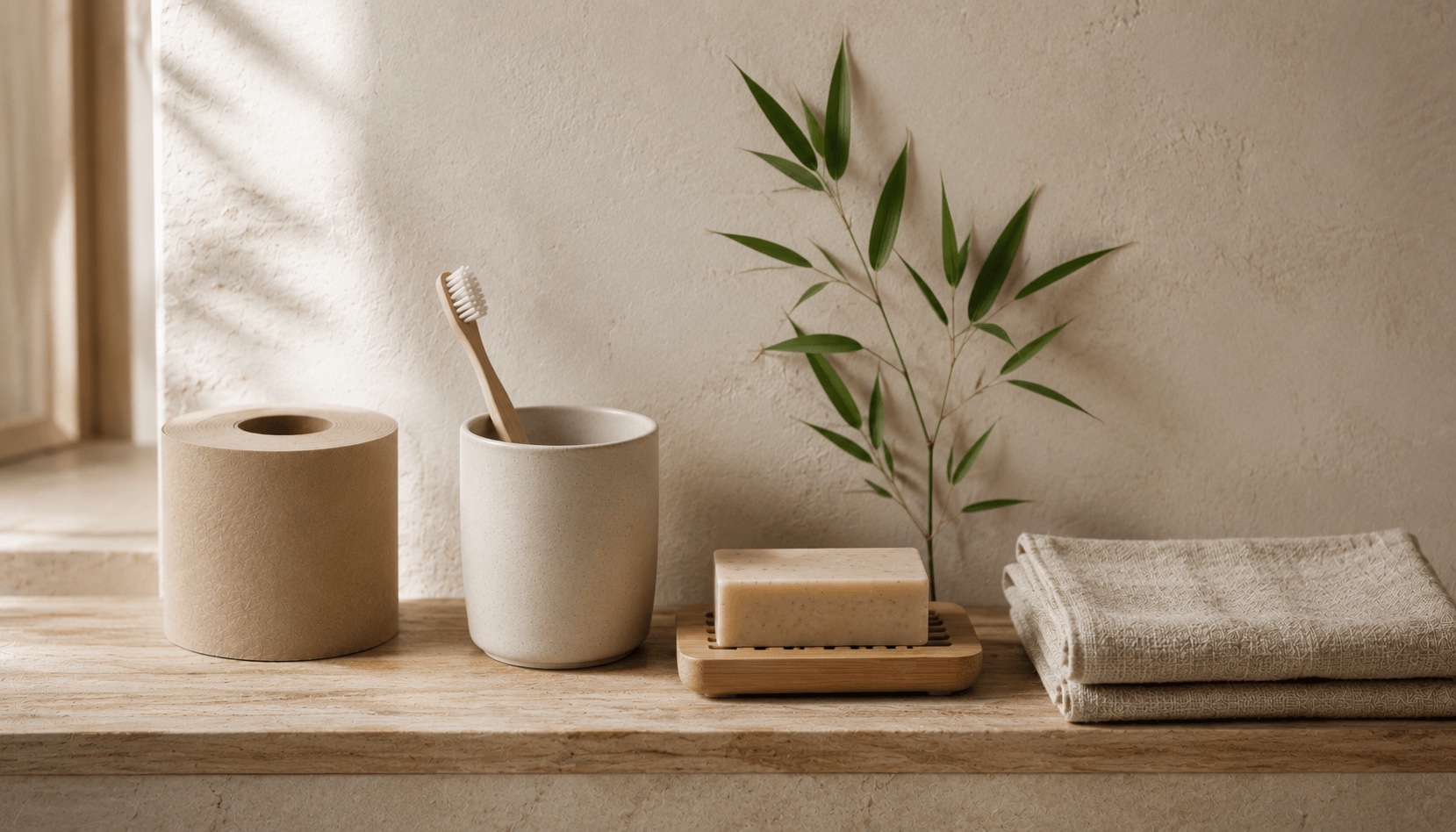
A meaningfully-less-plastic bathroom, in a typical Indian home that takes this seriously, ends up looking like:
- Bamboo tissue rolls in paper packaging.
- A bar of soap on a wooden or steel dish.
- A bamboo toothbrush in a ceramic cup.
- Bar shampoo or a refilled bottle from the local refill store.
- A safety razor on the shelf.
- A glass jar of floss next to the basin.
- A muslin face cloth on a hook.
It doesn't look stripped-down or self-denying. It looks slightly nicer than the all-plastic version, actually — more wood, more glass, more paper, less glossy molded plastic. And the bin at the end of the week has roughly one-fifth of the plastic that the old version generated.
If you'd like to start with the highest-leverage swap and let the rest follow, the bamboo tissue starter pack is where most of our customers begin. From there, you can build out the rest of the tiers at your own pace.
Zero-plastic, as a literal goal, is almost impossible. Mostly-plastic-free, as a real outcome, is well within reach.
Ready to buy?
Browse our full product catalogue or request wholesale pricing.